Philosophy & Ethics

Article teaser image

Research Ethics: A New Model For Reviews

Research ethics have come a long way since the dubious and troubling research experiments of the 1940s, and the now infamous Milgram obedience experiments of the 1960s. The public today has reason to assume that human subjects involved in research are protected. But recent cases questioning the reasons for and the processes behind university ethics reviews suggest they could be holding back research, and for all the wrong reasons. Today’s typical social scientist wishing to perform research on human subjects faces a complicated ethics review process. Researchers must nominate a level of risk…
Article teaser image

Anthropocene Epoch: How You Became More Powerful Than Nature

Overpopulation, greenhouse gases, climate disruption - it's a doomsday prophet's Nirvana. You, dear reader, are basically a blight on the pristine goodness of nature, but even being told that you stink has not led most of you to demand policy action. Why not? And will a Nobel laureate telling you to get off your butt help?(1)  Dr. Paul Cruzten, a 1995 Nobel Laureate in Chemistry, the fellow who popularized the term "anthropocene epoch", hopes his latest editorial, with Stanislaw Waclawek, on the subject creates a tipping point for change. Well, we already have changed. It used to be that…
Article teaser image

War On Doping And The Hypocritical Treatment Of Lance Armstrong

No doubt Lance Armstrong is still digesting the news that he has to repay $10 million (£6.4m) to previous sponsors following a ruling by an arbitration panel a few weeks ago. This is on top of the lifetime ban from all sporting competitions that he was given several years back. Many probably think he got the punishment he deserved, but was it done fairly? Good guys versus bad guys Leading sports organizations such as the International Olympic Committee and FIFA have been under pressure to resolve internal ethical issues in recent years. On the other hand the World Anti-Doping Agency (WADA…
Article teaser image

Do You Want To Donate Your Genetic Information After Death?

After they die, people are happy to donate their hearts, their eyes, even whole skeletons, without knowing anything at all about what will happen to them. What about genetic information?  Under current law, your genetic information is not inherited by default, so a child with a heritable form of cancer can't access their parent's genetic information after death if no consent was ever established. Clearly there needs to be a policy in the post-Human Genome Project age. A number of arguments exist both for and against postmortem disclosure. Disclosure could promote a relative's health…
Article teaser image

Fixing Outdated Guidelines For Human Vaccine Trials

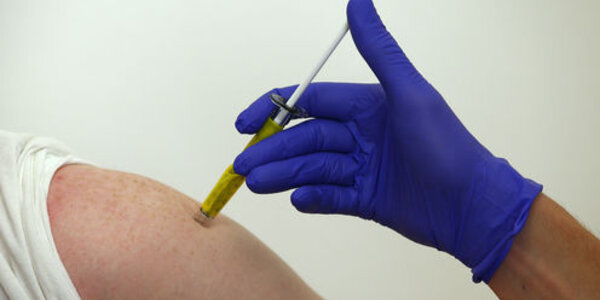
A volunteer receives a trial Ebola vaccine at the Centre for Clinical Vaccinology and Tropical Medicine in Oxford, southern England January 16, 2015. Eddie Keogh/Reuters Recently, Phase II and III trials of two vaccines for Ebola started in West Africa. The development of possible vaccines is welcome news. Like most vaccine trials, the current Ebola trials are being conducted under ethical guidelines derived from US standards for clinical research in human beings. Research in humans is a crucial part of our medical system. We need to be able to test that vaccines and drugs are safe and…
Article teaser image

Will Brain Images And Thoughts Be Protected Under The 4th And 5th Amendments?

Credit: Jon Olav Eikenes, CC-BY-SA By: Carrie Peyton Dahlberg, Inside Science (Inside Science) - Brain imaging can already pull bits of information from the minds of willing volunteers in laboratories. What happens when police or lawyers want to use it to pry a key fact from the mind of an unwilling person? Will your brain be protected under the U.S. Constitution's Fourth Amendment from unreasonable search and seizure?   Or will your brain have a Fifth Amendment right against self-incrimination? “These are issues the United States Supreme Court is going to have to resolve,” said Nita…
Article teaser image

We Need Women On Boards For Many Reasons, But Ethics Isn't One

There are many good reasons for increasing gender diversity on boards: better decisions, better performance, and better representation of the consumer base. But the idea, put forward in a variety of research over the past twenty years or so, that women on boards improve the moral and ethical decision-making of those boards has a number of problems for both women and men, in the boardroom and out of it. First, having gender equality on the board is increasingly part of corporate social responsibility initiatives. Rather than ethical standards improving when women are on boards, it may be that…
Article teaser image

Is Using Big Data To Detect Disease Outbreaks Ethical?

Personal information taken from social media, blogs, page views and so on are used to detect disease outbreaks, however, does this violate our privacy and trust if people do not consent to it? Dr. Effy Vayena from the University of Zurich and colleagues map the numerous ethical challenges confronting digital disease detection (DDD) and propose a framework to address the questions in a new article. They argue that this use of big data has the potential to strengthen global public health surveillance, including in low resource countries. However, the treatment and success of big data…
Article teaser image

Is Immolation A Valid Punishment Under Islamic Law?

There is confusion about whether immolation is permissible under Islamic law. EPA By Jon Hoover, Associate Professor of Islamic Studies, Faculty of Arts a University of Nottingham The killing of Jordanian pilot Moaz al-Kasasbeh by Islamic State has been explained as an act of retaliation for the air campaign against it. But there have been many questions about whether immolation is a valid form of punishment in Islamic law – and many Muslim scholars have argued that it is not. This is where the 14th-century Muslim scholar Ibn Taymiyya comes in. The 22-minute video of al-Kasasbeh’s murder ends…
Article teaser image

When The Clintons’ Doctor Embraces Pseudoscience

Pudgy and recovering from heart surgery, Bill Clinton needed someone to optimize his health. Hillary Clinton knew just the man for the job, and in 2005 introduced him to Dr. Mark Hyman, whose expertise they credit for Mr. Clinton’s current svelte physique. The three are reportedly personal friends, and discuss everything from childhood obesity to healthcare policy. (Mr. Clinton even blurbed his last book.) It isn’t just the Clintons who listen to Dr. Hyman. Despite having contributed nothing to medical science—unless you count his "UltraWellness Center" a contribution—Hyman is massively…