Atmospheric

Article teaser image

Asian Peat Fire Impact On Climate Change

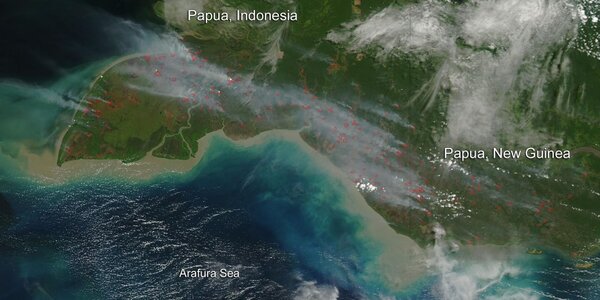
Wildfires send hot flames and smoke high into the air, including black carbon emissions associated with climate change and risk to human health. Unless the United States adapts sensible forest management policies, which means fewer instances of the Department of the Interior and environmental lobbyists conspiring to manipulate science reports, carbon emissions from wildfires in the contiguous U.S. could increase by 50 percent by 2050 and double by 2100. But high-profile wildfires should not be the only concern. Peatlands — an organic mixture of decayed and compacted leaves — are actually the…
Article teaser image

Climate Change May Shape Languages Too

Researchers have determined that languages with a wide range of tone pitches are more prevalent in regions with high humidity levels while languages with simpler tone pitches are mainly found in drier regions. They explain this by noting that the vocal folds require a humid environment to produce the right tone. That means climate and weather our voices too.  The tone pitch is a key element of communication in all languages, but more so in some than others. German or English, for example, still remain comprehensible even if all words are intonated evenly by a robot. In…
Article teaser image

Death By Boiling Air: The Asteroid Impact Wasn't The Only Thing Killing Dinosaurs

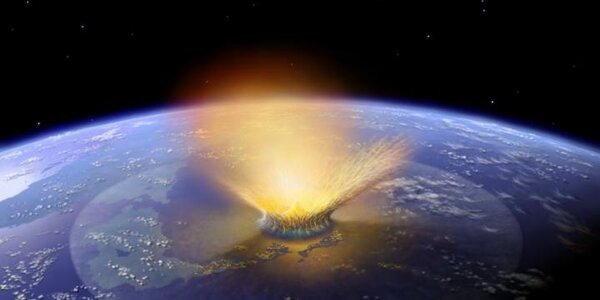
Credit: Don Davis By Claire Belcher, University of Exeter and Rory Hadden, University of Edinburgh The asteroid that wiped out the dinosaurs set off an intense heat wave that briefly boiled the Earth’s atmosphere – but it didn’t burn off all the plants. Humanity has not been unlucky enough to observe at first hand the effects of a large impact, so to investigate whether a massive asteroid would spark off a global wildfire we had to turn to the laboratory. We have modeled, for the first time, the heat generated by the impact and what it meant for the planet’s plants. Our research is published…
Article teaser image

2014 Was Warmest Since 1880

The 10 warmest years in the instrumental record, with the exception of 1998, have now occurred since 2000, which continues a long-term warming of the planet, according to an analysis of surface temperature measurements by NASA's Goddard Institute of Space Studies in New York. In a separate analysis of the raw data, NOAA scientists also found 2014 to be the warmest on record. They conclude that 2014 ranks as Earth's warmest since 1880. Since then, Earth's average surface temperature has warmed by about 1.4 degrees Fahrenheit (0.8 degrees Celsius), a trend that is largely driven by the increase…
Article teaser image

Petrichor: Raindrops Release Clouds Of Aerosols On Impact

People love that earthy smell after it rains. It turns out there is a good science reason for it, and it's been captured using high-speed imaging. Petrichor is the  phenomenon first characterized by Australian scientists as the smell released after a light rain. Now scientists at MIT believe they may have identified the mechanism that releases this aroma, as well as other aerosols, into the environment. Using high-speed cameras, the researchers observed that when a raindrop hits a porous surface, it traps tiny air bubbles at the point of contact. As in a glass of champagne, the bubbles…
Article teaser image

Western US Higher Temperatures At Higher Elevations Blamed On Biased Sensors

Recent results of a study finds that that sensor changes have significantly biased temperature observations from the Snowpack Telemetry (SNOTEL) station network. More than 700 SNOTEL sites monitor temperature and snowpack across the mountainous western U.S. SNOTEL provides critical data for water supply forecasts. Researchers often use SNOTEL data to study mountain climate trends and impacts to mountain hydrology and ecology.  University of Montana and Montana Climate Office researcher Jared Oyler and colleagues applied statistical techniques to account for biases introduced when…
Article teaser image

Emissions-Free Hydrogen Cars Get A Little More Viable

Hydrogen fuel cells may be the best option for powering zero-emission vehicles, Toyota will make them available in the United States in 2015, but those fuel cells require an electrocatalyst -- a platinum surface -- to increase the reaction rate, and the cost of the precious metal makes it hard for hydrogen fuel cells to compete economically with the internal combustion engine.  It's an issue of engineering and economics. A team led by Yushan Yan, Distinguished Professor of Engineering at University of Delaware.Yan's group has been working on a new type of fuel cells, using alkaline…
Article teaser image

Did Climate Change Play A Role In The AirAsia Crash?

Could climate change be making flying more unsafe? KamrenB Photography, CC BY By Todd Lane, University of Melbourne On December 28, AirAsia flight QZ8501 crashed into the sea between Indonesia and Singapore. Shortly before the crash, the pilots requested an alteration to the flight route due to severe weather. While the precise cause of the crash is not yet clear (with the aircraft’s black box still to be retrieved), it seems likely that weather played a role. AirAsia CEO Tony Fernandes later said that “unique weather conditions” were present around the time of the crash. He reportedly stated…
Article teaser image

80 Percent Of Coal Must Stay In The Ground To Avoid Dangerous Climate Change

80 percent of current coal reserves, 50 percent of gas reserves and 33 percent of oil reserves should remain in the ground by 2050 to avoid the 2°C target established by the Intergovernmental Panel on Climate Change and used as a benchmark by policy makers, according to a new estimate. So much for that Peak Oil of 1992. We need to worry about Oil Glut instead. The paper identifies the geographic location of existing reserves that should remain unused - it's no secret that is China, Russia and the United States, along with 260 billion barrels oil reserves in the Middle East. The Middle East…
Article teaser image

Soil-Carbon Cycle Model: The Carbon Stores In Soil Freed By CO2 Could Be Substantial

An increase in carbon dioxide in the atmosphere could initiate a chain reaction between plants and microorganisms that would unsettle one of the largest carbon reservoirs we have; soil. Citing a new model, researchers say that the carbon in soil, which contains twice the amount of carbon in all plants and Earth's atmosphere combined, could become increasingly volatile as people add more carbon dioxide to the atmosphere, largely because of increased plant growth. The researchers developed their computer model to show at a global scale the complex interaction between carbon, plants and soil,…