
An artificial big toe attached to the foot of an ancient Egyptian mummy could prove to be the world's earliest functional prosthetic body part, say scientists. If true, the toe will predate what is currently considered to be the earliest known practical prosthesis - Roman Capua Leg from 300BC, made from bronze - by several hundred years. The leg was held at the Royal College of Surgeons in London but was destroyed by Luftwaffe bombs during the Second World War.
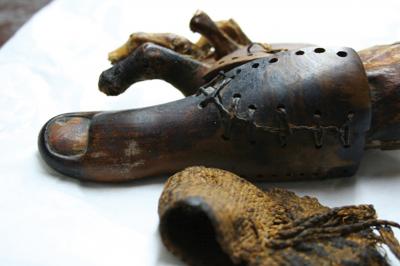
Research at The University of Manchester is hoping to prove that the wood and leather artefact in the Cairo Museum not only looked the part but also helped its owner walk 'like an Egyptian'.
Jacky Finch, who is carrying out the study at Manchester's KNH Centre for Biomedical Egyptology, is recruiting volunteers whose right big toe has been lost in order to test an exact replica of the artificial toe.
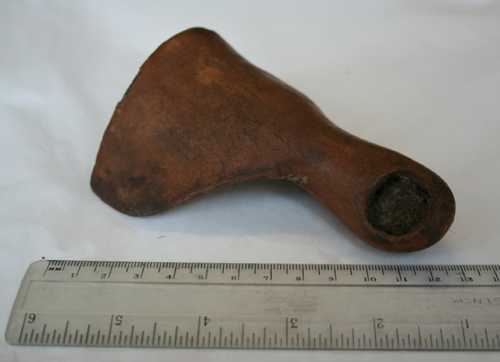
A model of a second false Egyptian big toe on display in the British Museum, albeit without its mummy, will also be tested at the Human Performance Laboratory at nearby University of Salford.
"The toes date from between 1000 and 600BC, so if we can prove that one or both were functional then we will have pushed back prosthetic medicine by as much as 700 years," said Jacky.
"The Cairo toe is the most likely of the two to be functional as it is articulated and shows signs of wear. It is still attached to the foot of the mummy of a female between 50 and 60 years of age. The amputation site is also well healed."
The British Museum artefact - named the Greville Chester Great Toe after the collector who acquired it for the museum in 1881 - is made from cartonnage, a sort of papier maché made using linen, glue and plaster.
It too shows signs of wear, indicating that it may have been worn by its owner in life and not simply attached to the foot during mummification for religious or ritualistic reasons. However, unlike the Cairo specimen, the Greville Chester toe does not bend and so is likely to have been more cosmetic.
"The Human Performance Laboratory will use state-of-the-art technology to test whether the replicas of the artificial toes benefit the wearer and could therefore be deemed functional," said Jacky.
"If either one is functional it may be interesting to manufacture it with modern materials and trial it for use on people with missing toes."
Source: University of Manchester


