Paleontology

Article teaser image
Europe’s past booms and busts, often driven by natural changes in climate, has been revealed using thousand-year-old pollen, spores and charcoal particles fossilized in glacial ice. The analysis of microfossils preserved in European glaciers also revealed earlier-than-expected evidence of air pollution and the roots of modern invasive species problems. The study looked at pollen, spores, charcoal and other pollutants frozen in the Colle Gnifetti glacier on the Swiss and Italian border. The research found changes in the composition of these microfossils corresponded closely with known major…
Article teaser image
Crinoids are unusually beautiful and graceful members of the phylum Echinodermata. They resemble an underwater flower swaying in an ocean current. But make no mistake they are marine animals. Picture a flower with a mouth on the top surface that is surrounded by feeding arms. Awkwardly, add an anus right beside that mouth.  Crinoids with root-like anchors are called sea lilies. They have graceful stalks that grip the ocean floor. Those in deeper water have longish stalks up to 3.3 ft or a meter in length. Then there are other varieties that are free-swimming with only vestigial…
Article teaser image
Previously Calycoceras Tarrantense, this ammonite is now Conlinoceras tarrantense after J.P. Conlin, a famous early 20th-century fossil collector from Texas, USA. Ammonite expert Bill Cobban used this collection to describe many Texas Cretaceous ammonites species including this species from Tarrant County, Arlington, Texas. He was a surveyor by training and kept incredibly detailed notes on the context of his fossils. Conlin donated his collection to the USGS and we have learned much by studying it along with other specimens from the Lone Star State. Almost a quarter of Texas is covered by…
Article teaser image
Horseshoe crabs are marine and brackish water arthropods of the order Xiphosura — a slowly evolving, conservative taxa. Much like (slow) Water Striders (Aquarius remigis), (relatively sluggish) Coelacanth (Latimeria chalumnae) and (the current winner on truly slow evolution) Elephant Sharks (Callorhinchus milii), these fellows have a long history in the fossil record with very few anatomical changes.  But slow change provides loads of great information. It makes our new friend, Yunnanolimulus luoingensis, an especially interesting and excellent reference point for how this group evolved…
Article teaser image
We can trace the lineage of barnacles back to the Middle Cambrian. That is half a billion years of data to sift through.  If you divide that timeline in half yet again, we begin to understand barnacles and their relationship to other sea-dwelling creatures — with a lens that reveals ancient migration patterns. Barnacles are in the infraclass Cirripedia in the class Maxillopoda. They are marine arthropods related to crabs and lobsters.  In the Kwak̓wala language of the Kwakiutl or Kwakwaka'wakw, speakers of Kwak'wala, of the Pacific Northwest, barnacles are known as k̕wit̕a̱'a. They…
Article teaser image
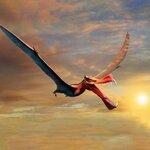
A fearsome beast soared above the ancient, vast inland sea once that once covered covering much of outback Queensland. This newly found pterosaur, named Thapunngaka shawi, was discovered in Wanamara Country, near Richmond in North West Queensland. It's the stuff of nightmares, with a spear-like mouth containing 40 giant teeth and a wingspan around 20 feet. We may imagine it to be like a big bird or a bat but that is not so, according to University of Queensland doctoral student Tim Richards: "Pterosaurs were a successful and diverse group of reptiles – the very first back-boned animals to…
Article teaser image
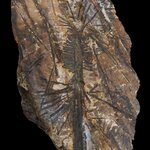
In Mongolia, plants preserved in a volcanic ash fall deposit as part of a so-called "vegetational Pompeii," may have resolved the mystery of the Noeggerathiales. What are Noeggerathiales? Paleontologists have wanted to really know since they first learned of them. Scientists know they were peat-forming plants that lived approximately 325-251 million years ago but their relationships with other plant groups was unknown. Were they an evolutionary dead end? Now it has been established that Noeggerathiales had the spore propagation mode of ferns and the vascular tissue of seed plants. They…
Article teaser image
In the age of the dinosaurs, you could have walked from one pole to another. At that time, the continents were all joined together, forming the supercontinent Pangea.  Yet they didn't.Though sauropodomorph dinosaurs first appeared in Argentina and Brazil about 230 million years ago, it took them 15,000,000 years to migrate to the northern hemisphere. "It's as if snails could have done it faster," says Dennis Kent, adjunct research scientist at Columbia University's Lamont-Doherty Earth Observatory and co-author of a new paper on sauropodomorphs -- a group of long-necked, herbivorous…
Article teaser image
Most of Ireland’s rocks are the wrong age for dinosaur fossils, either too old or too young. That doesn't mean dinosaurs weren't there, it means fossilization is a true anomaly and finding fossils makes it even more challenging to have hard evidence. That has now been achieved. Two fossil bones found by the late citizen scientist Roger Byrne, and donated along with many other fossils to Ulster Museum, have been confirmed as early Jurassic rocks found in Islandmagee, on the east coast of County Antrim. Originally it was assumed the fossils were from the same animal, but the team found they…
Article teaser image
The first fossils of a duckbilled dinosaur have been discovered in Africa, which means dinosaurs must have crossed miles of open water to get there. Ajnabia odysseus was found in Morocco and dates to the end of the Cretaceous, 66 million years ago. Ajnabia was a member of the duckbill dinosaurs, diverse plant-eating dinosaurs that grew up to 15 meters long. But the new dinosaur was tiny compared to its kin - at just 3 meters long, it was as big as a pony. Duckbills evolved in North America and eventually spread to South America, Asia, and Europe. Because Africa was an island continent in…