
It's been thought that very preterm babies were not developed enough to benefit from 'comfort strategies but research published today in BMC Pediatrics suggests that even babies born between 28 and 31 weeks could benefit from skin-to-skin cuddling with their mother before and during painful procedures, such as a heel lance.
Celeste Johnston of McGill University, Montreal, Canada and colleagues have already shown that skin-to-skin contact, known as kangaroo mother care (KMC) helps babies born at 32 to 36 weeks to recover from pain.
They carried out a randomized crossover trial to see whether…
Clinical Research
New research by the Universities of Exeter and Oxford states that a child’s sex is associated with the mother’s diet. Their evidence shows a link between higher energy intake around the time of conception and the birth of sons. The findings may help explain the falling birth-rate of boys in industrialized countries, including the UK and US.
The study focused on 740 first-time pregnant mothers in the UK, who did not know the sex of their fetus. They were asked to provide records of their eating habits before and during the early stages of pregnancy. They were then split into three groups…
Results from a one-year prospective, observational study conducted to determine the impact of beginning treatment with AVONEX on MS patients’ overall quality of life (QoL) were announced today. The data showed that patients receiving treatment with AVONEX experienced statistically significant improvements in QoL, as measured by the EuroQol questionnaire (EQ-5D), compared to baseline. In addition, the study demonstrated the negative impact of disability progression (as measured by the expanded disability status scale (EDSS)) on employment status and QoL. These data were presented today as a…
If clumps of your hair start to fall out from a common form of baldness, a new review of existing research unfortunately offers little comfort.
Patients who are afflicted by the condition known as alopecia areata — patchy hair loss — should understand that there is “no reliable, safe, effective, long-term treatment,” said review co-author Dr. Mike Sladden, a dermatologist and senior lecturer at the University of Tasmania in Australia.
Alopecia areata accounts for an estimated one in every 50 dermatologist visits in the United States and the United Kingdom, and one study suggests that 1.7…
The amount of oxygen available to a baby in the womb can affect their susceptibility to developing particular diseases later in life. Research presented at the annual Society for Endocrinology BES meeting in Harrogate shows that your risk of developing cardiovascular disease can be predetermined before birth, not only by your genes, but also by their interaction with the quality of the environment you experience in the womb.
Researchers at the University of Cambridge, led by Dr Dino Giussani, examined the role that oxygen availability in the womb plays in programming your susceptibility to…
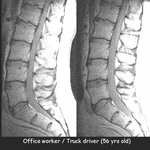
What do you learn by looking at the spines of hundreds of Finnish twins? If you are the international team of researchers behind the Twin Spine Study, you find compelling proof that back pain problems may be more a matter of genetics than physical strain.
The findings of the Twin Spine Study, an ongoing research program started in 1991, have led to a dramatic paradigm shift in the way disc degeneration is understood. Last month a paper presenting an overview of the Twin Spine Study’s multidisciplinary investigation into the root causes of disc degeneration received a Kappa Delta Award from…
There's no question that air superiority made a huge difference in the Allied victories of World War II but because flight was still very much in its infancy, and high speed aerial combat was previously unknown, a lot of physiological issues had to be addressed in order to keep pilots as safe as possible before going into even more dangerous combat.
Physiology is the study of how molecules, cells, tissues and organs function to create health or disease. World War II-era research came up with a number of advancements that made that possible, according to Jay B. Dean, of the University of…
People affected by Huntington’s disease, which affects up to one person in every 10,000 but clusters in families and certain populations, develop clusters of a defective protein in their neurons and shrinkage of brain areas associated with movement. The disorder causes disability and eventually death, but does not normally manifest until after people have had children, allowing the disease gene to be passed on.
“Although Huntington’s disease is considered the epitome of genetic determinism, environmental factors are increasingly recognised to influence the disease progress”, the researchers…
On March 26, 2008, surgeons at UC San Diego Medical Center removed an inflamed appendix through a patient’s vagina, a first in the United States.
Following the 50-minute procedure, the patient, Diana Schlamadinger, reported only minor discomfort. Removal of diseased organs through the body’s natural openings offers patients a rapid recovery, minimal pain, and no scarring. Key to these surgical clinical trials is collaboration with medical device companies to develop new minimally-invasive tools.
The procedure, called Natural Orifice Translumenal Endoscopic Surgery (NOTES), involves passing…
Everyone experiences anxiety from time to time – something specific, like going down into a dark cellar where you know the Book of the Dead is waiting,or, in a more general sense, trepidation about what the future holds. Some people are gripped by powerful fears when confronted by quite normal everyday situations. For example, sufferers of agoraphobia frequently have panic attacks when caught up in a crowd.
Their blood 'curdles' or 'freezes in their veins' in a very real way, saya a Bonn-based research team, and it leads to increased risk of thrombosis or heart attack
The symptoms can be…