A long time ago, before starting the studies which would lead to a career as a particle physicist, I studied music. After getting a degree as a master in Antique Instruments, I studied composition for four years. But I was not particularly well versed in that tough discipline, and I did the right thing in dropping out. I was 18, and I decided that Science was going to be my job, not music. But I kept an interest in music and I continued - a bit erratically - to study the piano.
Fast forward to present times. I found some music sheets and decided to try my old hand at the rather idle practice of mimicking some great composer of the past. So I composed the first tempo of a sonata in Ludwig van Beethoven's style. It took me two full days of work to put it together, so it is hard to say when I will have time for the other two tempi. Hence it makes sense to expose this partial work to your judgement.
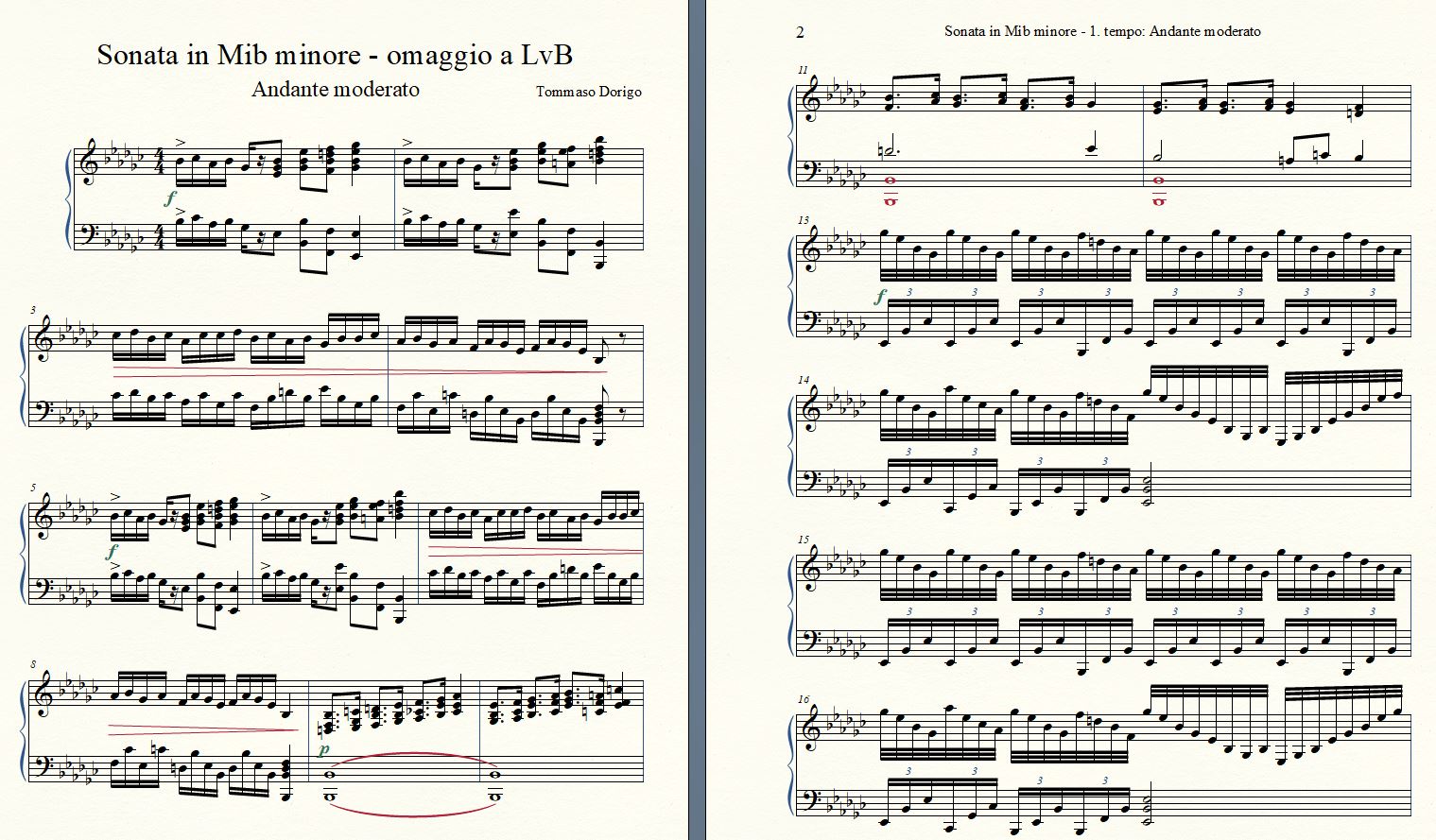
(Above, a snapshot of the first two pages of the piece. A link to the full 10-page pdf is in the comments section.)
Click here to listen to the audio track! It will not be the worst 4 minutes of your day, I promise!