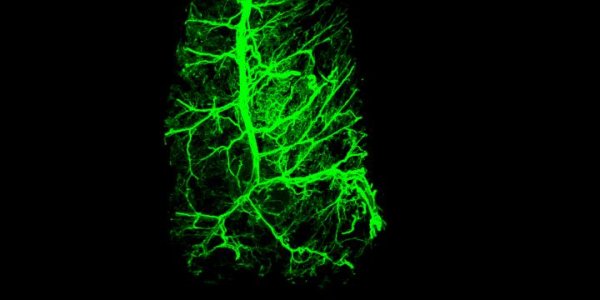
How sneaky HIV escapes its cell

How sneaky HIV escapes its cell

Like hobos on a train, HIV, the virus that causes AIDS, uses a pre-existing transport system to leave one infected cell and infect new ones, Hopkins scientists have discovered. Their findings,…
Ethanol - now it cures everything

Ethanol - now it cures everything

As if tortillas weren't already expensive enough because of a ridiculous 2005 enviromental law mandating usage and subsidies for ethanol, now the pesky medical community is in on the take.…
Geoengineering -- A quick fix with big risks

Geoengineering -- A quick fix with big risks

Radical steps to engineer Earth’s climate by blocking sunlight could drastically cool the planet, but could just as easily worsen the situation if these projects fail or are suddenly halted,…
The link between Khat and mental illness

The link between Khat and mental illness

Commonly used by around 10 million people in east Africa and countries in the Arabian peninsula, chewing khat for its stimulant properties has also become popular in the UK among immigrants of the…
Mysterious radio waves on Titan

Mysterious radio waves on Titan

The Huygens Atmosphere Structure Instrument (HASI) scored a first in 2005 by measuring the electrical conductivity of Titan’s atmosphere. The results hint at a new way to investigate the subsurface…
Fuel cells from lobster shells

Fuel cells from lobster shells

Discarded crab and lobster shells may be the key to prolonging the life of microbial fuel cells that power sensors beneath the sea, according to a team of Penn State researchers. To produce energy,…
Cognitive lock-in: teaching an old dog new tricks

Cognitive lock-in: teaching an old dog new tricks

The ability to learn from experience is of central importance to human existence. It allows us to acquire many of the skills we need to complete a wide variety of complicated, multi-step tasks in an…
Suriname rainforest yields 24 new species

Suriname rainforest yields 24 new species

Scientists exploring the remote highlands of eastern Suriname discovered 24 species believed to be new to science, including an Atelopus frog with brilliant purple markings, four Eleutherodactylus…