Big Bang Not To Follow Pluto

Big Bang Not To Follow Pluto

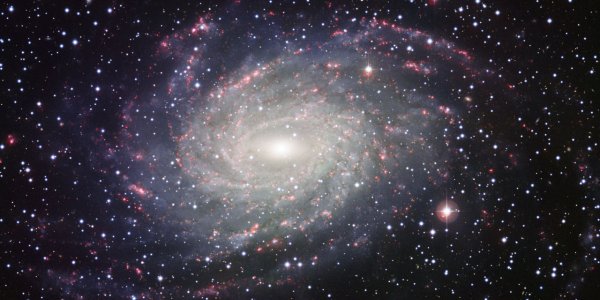
There are often heated discussions about the Big Bang.  The Big Bang is well defined as the high density state that you get if you extrapolate the today observable cosmic Hubble expansion…
Follow The Space Money?

Follow The Space Money?

NASA historically has received 0.5% to 1% of the federal budget, a penny or less per dollar.  I don't want to make that sound small-- I'd love a penny for every federal dollar-- but in terms of…
Water Inside The Moon - A Lot Of It

Water Inside The Moon - A Lot Of It

There is water inside the moon.  A lot, it turns out, according to the first measurements of water in lunar melt inclusions, which show that some parts of the lunar mantle have as much water as…
Small Size Of Mars Explained Using Chondrites

Small Size Of Mars Explained Using Chondrites

The rapid development of Mars, as little as two to four million years after the birth of the solar system (far more quickly than Earth) explains why it is so small by comparison, according to a new…
How To Create Your Own Mission Patch

How To Create Your Own Mission Patch

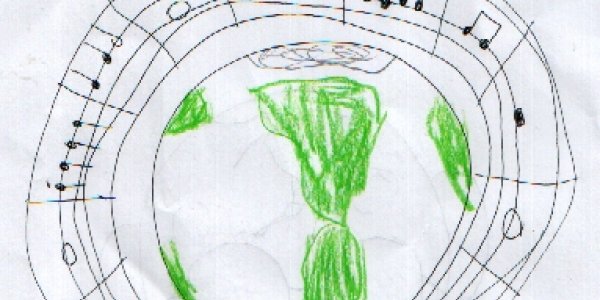
For our Calliope picosatellite mission, I want to make it a real space experience.  That means it needs a mission patch.  And first, let me thank you all-- our fans and community-- for…
Look Inside A 'Spring' Storm On Saturn

Look Inside A 'Spring' Storm On Saturn

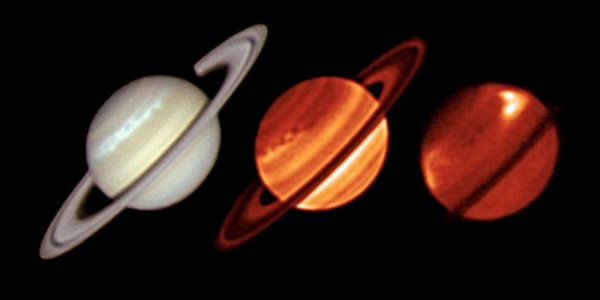
Saturn may look like a nice place to visit through a telescope but once each Saturn year (that's 30 years to you and me) 'spring' arrives in the northern hemisphere of the giant planet and things go…
Saturn in a 24-Inch Dob

Saturn in a 24-Inch Dob

Last night I had the pleasure to visit Mauro, a friend of mine and an amateur astronomer. Mauro owns a 24" dobson telescope with a mirror crafted by the superb hands of Romano Zen, the same who made…
Dwarf Planet Haumea May Contain Crystalline Ice

Dwarf Planet Haumea May Contain Crystalline Ice

A few years ago, when 2% of astronomers decided Pluto should no longer a planet, the confusion was so great and the definition so arbitrary and so we now have five 'dwarf' planets in our solar system…