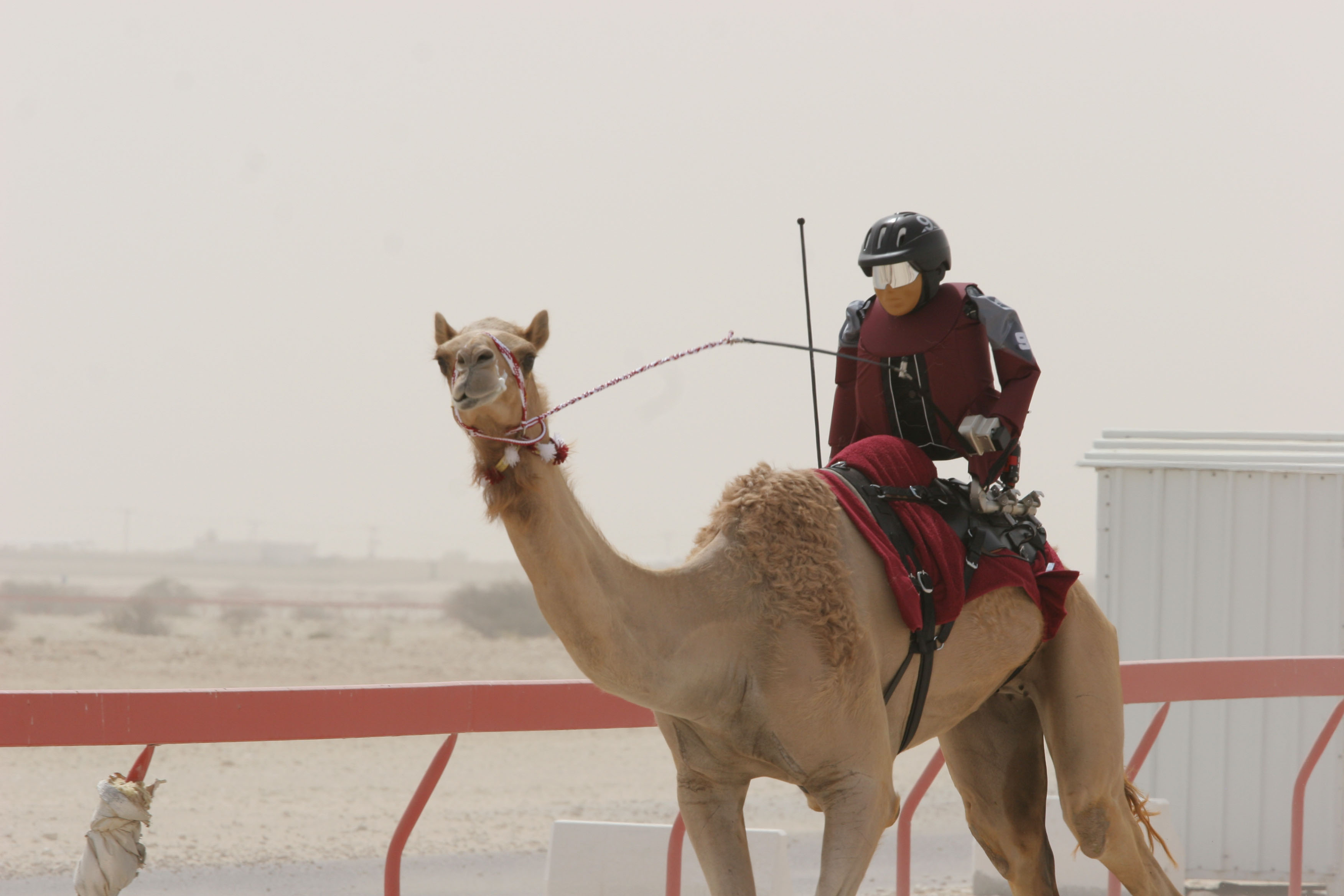
Although robotic jockeys for camel racing have been successfully
deployed for several years now, some have voiced concerns about them –
for many of the 'bots are configured to vigorously cane the competing camels.
(Hi-res photographic example here – the Swiss-made KMEL - manufactured by the K-Team Corporation
– note the robotic whipping mechanism).
But now a potentially less
harmful camel jockey-bot is available. It was developed by
researcher and inventor Mohamed Shakir, formerly based at the Department of Electrical Engineering, Qatar University.
The bot still brandishes a whip, but it’s used only to provide a
‘whip-crack’ sound above the camel (rather than actually thrashing its
‘sensitive areas’). At the same time it also relays crucial voice
commands to the animal via a dedicated radio-link, amplifier and a set
of speakers. The commands are remotely provided in real-time by the
camel’s trainer – who rides alongside the racetrack in the comfort of an
SUV.
A photo of the new camel jockey-bot is available here, courtesy qatarqlick.com
Notes: The impetus for camel-jockey-bot development came in 2002, when the United Arab Emirates prohibited the use of child camel-jockeys (under 15 years of age). Qatar followed suit with similar legislation in 2005.
BONUS: Explore the extensive camel racing facilities at As-Sahhaniyah, (a.k.a. Al Shahaniyah) Qatar, via satellite imagery courtesy Google maps. [zoom out to view]