A comet is a magical sight in the heavens. Comets visible to the naked eye are a uncommon event, and sometimes they put up very suggestive shows in our skies. Those of us who have witnessed the apparition of a bright comet do not forget that experience easily.
The recent landing on comet Churyumov-Gerasimenko of the Rosetta spacecraft has made even more fascinating the observation of comets from the ground, as we got treated by close-ups of the comet surface that resemble mountainous terrains on Earth. Imagining a rock streaming in the sky, coming nearby after a long trip from the Oort cloud, and maybe returning sometimes in the future, or maybe getting lost forever, is truly remarkable.
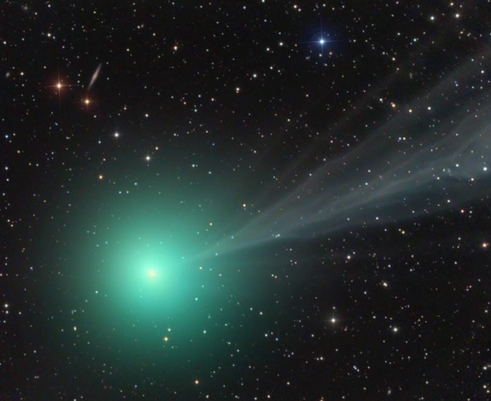 Comet Lovejoy is currently a lovely object for astro-photographers, as the picture on the right witnesses. This was taken by the British imager Damian Peach, who is best known for his award-winning images of Jupiter but who excels at every target.
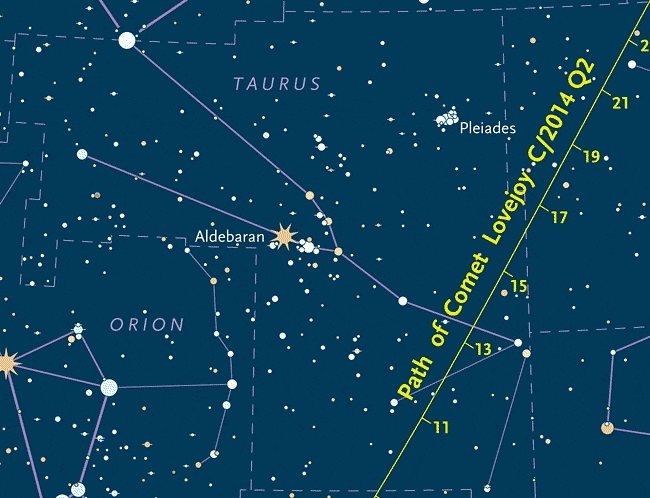
If you live under dark skies, I advise you to step out on a clear night during one of the next few days, as comet Lovejoy is crossing a region of sky where it is well observable by most of us. It has reached naked-eye visibility, but I advise you to get equipped with a good pairs of binoculars - a 7x50, or even better a 11x80 set (I have a 20x100 pair, but it weighs 10 pounds and makes observation a bit complicated if you do not want to carry around a hefty tripod; so I will use my 7x50 for this task).
The finder chart below should allow you to locate the comet easily during the first hours after sunset. I assume you are capable of locating Orion (bottom left), one of the most well-known constellations of the winter sky. Enjoy your views, and be sure to share your experience with the rest of us in the comments thread below!