Dark Atoms and Mirror Matter

Dark Atoms and Mirror Matter

  Over in print media today, New Scientist's cover article was on a "new" idea for what dark matter is. Apparently, dark matter should be composed of Dark Atoms, in a theory introduced by…
Help High School Kids Visit CERN!

Help High School Kids Visit CERN!

Through my colleague Marco Cirelli I got to know about the effort of 36 high-school student of Charlottesville (VA), who are fund-raising for a trip to CERN this spring. I thus visited their home…
On Nymphs and Satrys: Orchids

On Nymphs and Satrys: Orchids

Photo: Michele Pokrandt Orchidaceae get their name from the Greek ὄρχις (órkhis), which literally means "testicle", a nod to the naughty nub shape of their roots. In Greek mythology, Orchis was…
Ancient Perfection: Dragonflies

Ancient Perfection: Dragonflies

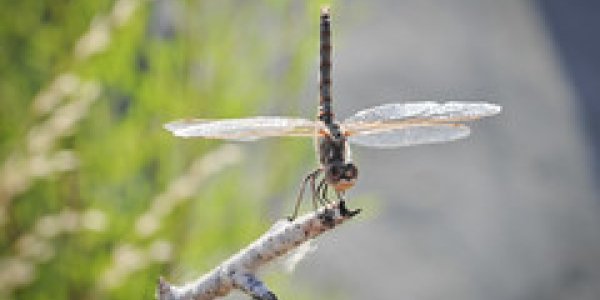
Dragonflies, from the order Odonata, have been around for over 250 million years.  I've seen fossil dragonflies from the Eocene some 50 million years ago that would have been exquisite monsters…
Stars That Ring Like Bells

Stars That Ring Like Bells

Time to ring in a new year with pressure waves.  We can see, but not, hear true sonic waves generated from stars, as the planet-hunting Kepler space telescope is finding.  We also get to…
Exploding toads and other matters

Exploding toads and other matters

For the last two days we have had our BBC television naturalist Chris Packham presenting us with “Nature’s Weirdest Events”. Here are my three favourites from this session. Exploding toads In…
Argon-Argon: Improving The World's Slowest Clock

Argon-Argon: Improving The World's Slowest Clock

Welcome to the world's slowest clock. The 'argon-argon clock' works by measuring the ratio of the amount of radioactive potassium in a sample of rock to the amount of its decay product, argon. As…